How young mothers are shaping the foundations of a climate-resilient food and livelihoods project in Tanzania
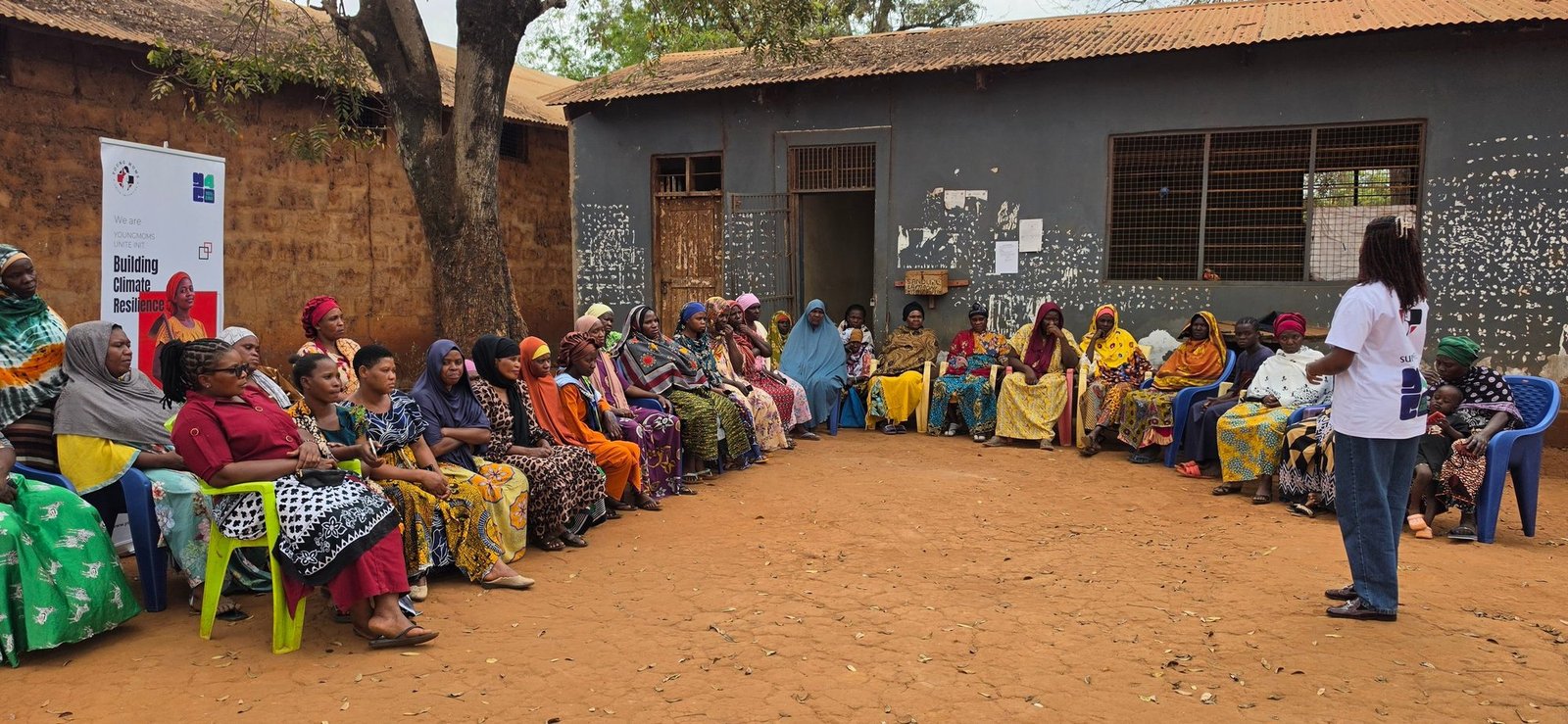
During visits to Mvomero, I met young mothers carrying several responsibilities at once: caring for children, finding food, and trying to earn a living while rainfall becomes less predictable. Their experience stayed with me. A response to climate change would have to make sense in the rhythm of their daily lives. It would have to address food, land, skills and income together.
That conviction became Mamas Grow, a Young Moms Unite Initiative project supported by Youth4Climate. Our long-term plan is to work with 2,300 young mothers aged 14–19 across 20 villages in Morogoro and Dodoma. We want participants to shape youth-led agroecological gardens, learn practical nutrition and enterprise skills, use helpful climate information, and build more dependable ways to save and earn. These are project goals, and the first stage is about building the evidence and local agreements needed to pursue them responsibly.
Starting with what young mothers tell us
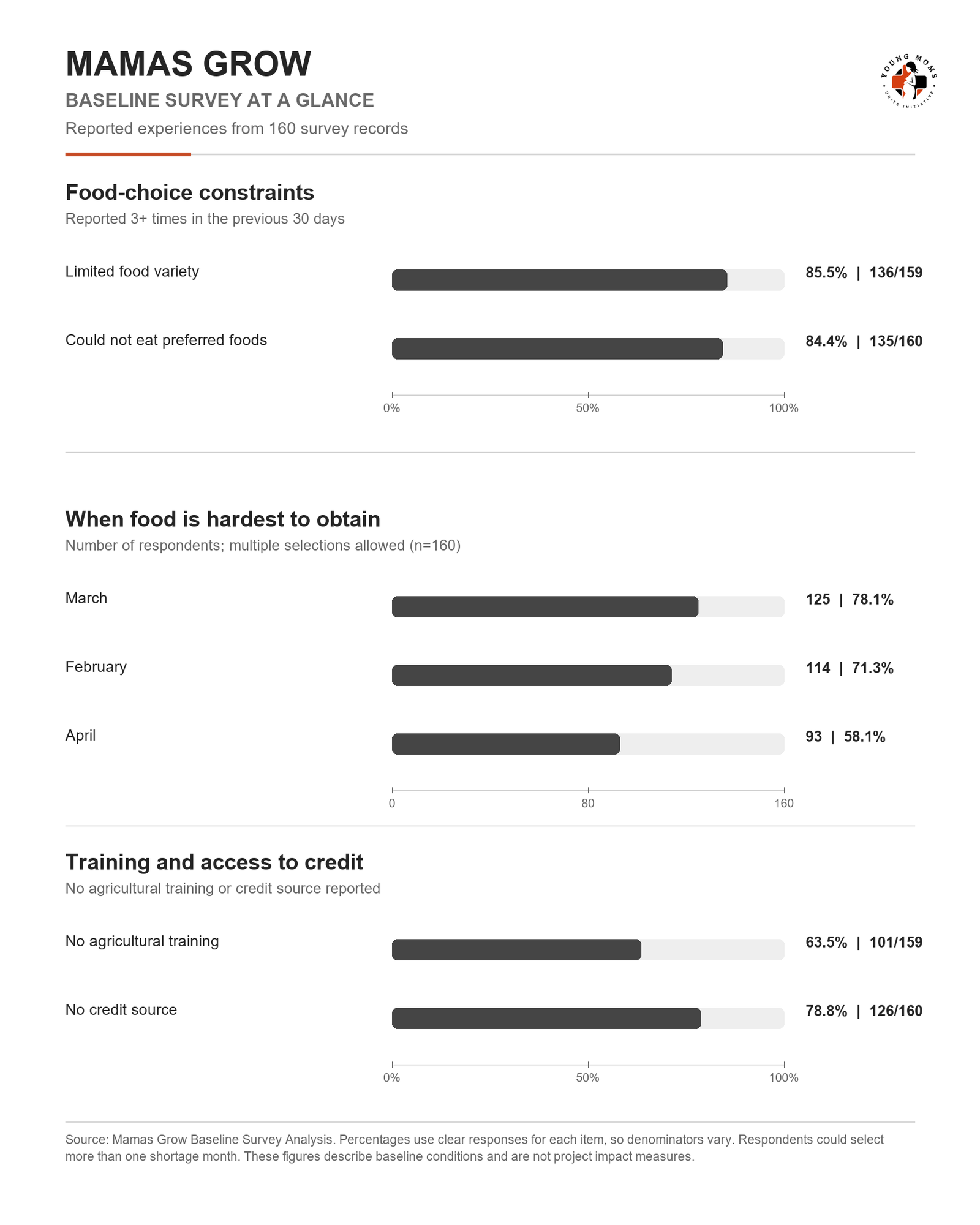
Before deciding what a garden should grow, we need to understand the households it is meant to serve. Our baseline analysis brings together 160 survey records. In the previous 30 days, 135 of 160 respondents said they had been unable to eat the foods they preferred on at least three occasions. Limited food variety was reported at that frequency by 136 of 159 respondents who answered that question. When asked about the months in which food is hardest to obtain, respondents selected March most often, followed by February and April.
The survey also shows why training and access matter. Among 159 clear responses, 101 reported no agricultural training. Of 160 respondents, 126 reported no source of credit. These figures describe a starting point; they do not measure what Mamas Grow has achieved. They help us ask better questions: Which crops could make meals more varied? When should gardens be ready to produce? What practical skills would participants use immediately? How can a young mother take part if she has limited time, land or access to a smartphone?
The answers will not be identical in every village. A useful plan begins with listening to participants, checking local conditions and leaving room for them to change the design.
The baseline also reminds us to ask about the barriers behind each answer. A household may know which vegetables would improve a meal but lack water, a suitable growing space or money for seed. A young mother may want to join a training session but have childcare responsibilities. Numbers help us see the scale of a problem; conversations will help us choose a response that fits the people living with it.
Preparing to move from plans to practice
Our team has prepared community kickoff agendas for four planning clusters. Each agenda creates space to introduce the project, hear local priorities, discuss possible garden sites and explain voluntary participation and feedback. We have also developed draft site assessment forms and crop layouts. The layouts explore combinations of locally familiar crops, including beans, maize, okra, peppers and African eggplant. They are starting points for discussion; soil, water, season and local agricultural advice will determine the final choices.
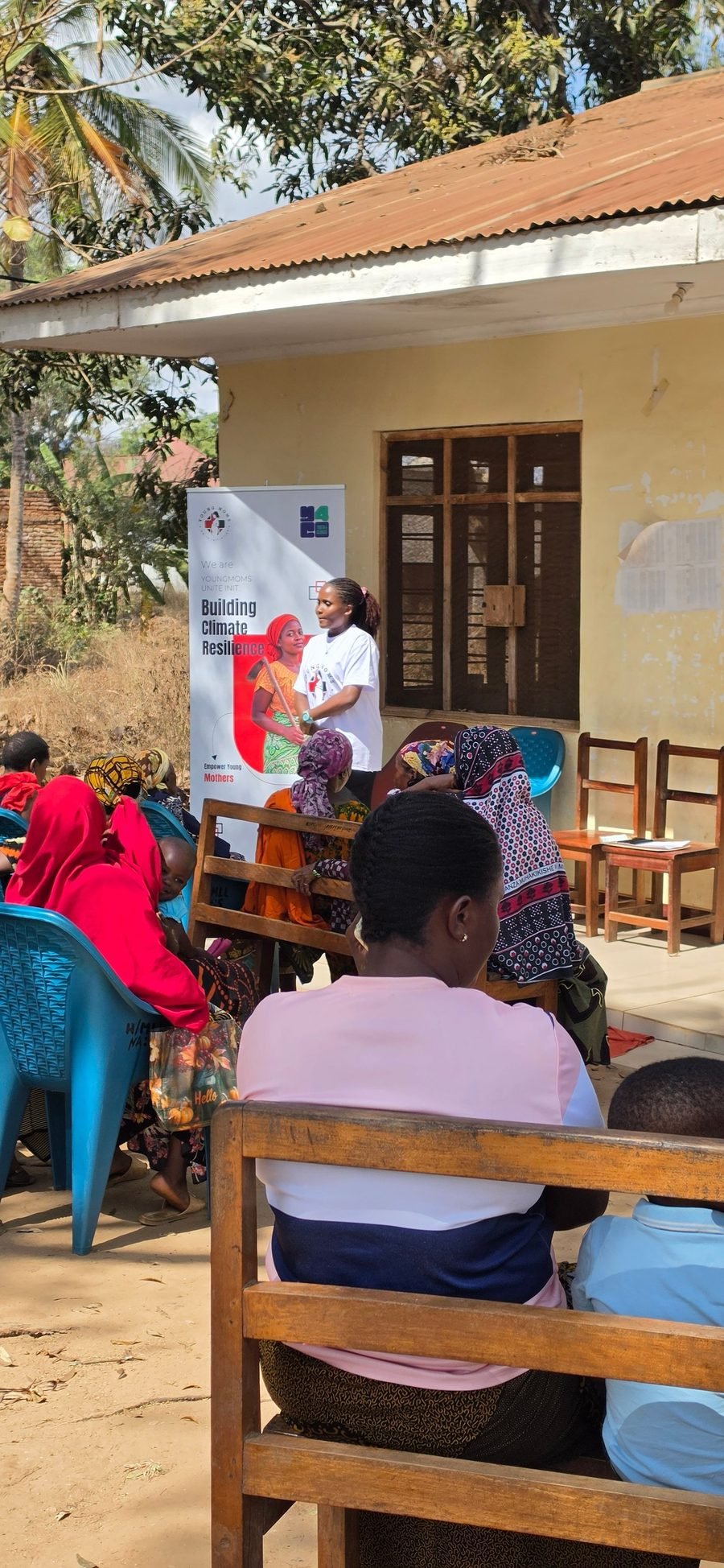
Training preparation has moved forward as well. Four Swahili facilitator guides now cover agroecology, nutrition, digital literacy and entrepreneurship.
Each guide includes a timetable, short exercises, a larger group activity, questions to check understanding and a worksheet participants can use by writing, drawing or speaking. We chose this practical format because people learn more when they can try an idea, explain it in their own words and decide whether it fits their circumstances.
These are tangible foundations: survey findings to guide decisions, materials for community conversations, draft designs to test on actual sites and lessons ready for local adaptation. The next measure of progress will be what happens when those tools are used with participants.
What we are learning
The first lesson is that climate resilience starts with everyday choices. A garden plan has to respond to the months when food is scarce, the water available, the crops households eat and the time young mothers can spend on a plot. The survey gives us patterns, while community discussion will help explain what sits behind them.
The second lesson is that access is part of the design. Young mothers need clear and dependable arrangements for using land. They also need training in a language and format they can use, whether or not they own a smartphone or are comfortable reading long instructions. That is why our training guides use Swahili, demonstrations, discussion and simple exercises.
The third lesson is to document progress carefully. Survey results are a baseline. A proposed site is not yet a secured garden. A prepared training guide is not the same as a completed session. Keeping those distinctions clear helps us improve our work and gives communities and partners an honest account of what has happened.
It is just as important to make feedback part of the work. As the project moves into delivery, participants should be able to say whether a training exercise was useful, whether a meeting time excluded them or whether a proposed crop would actually be eaten or sold locally. Their answers may require us to adjust a plan we have already written. That is how the project can become more practical over time.
Challenges we are working through
Turning a garden concept into a dependable place to grow food requires more than a crop diagram. Land arrangements must be agreed, site conditions checked and each design adapted to what is actually available. Our approved project plan describes 20 gardens, while a four-cluster site model is also under consideration. We are reviewing the final scope with Youth4Climate so the site records, land agreements and designs all describe the same agreed approach.
Seasonal food shortages make timing another challenge. The months highlighted in the baseline remind us that preparation must lead to planting and reliable water management at the right time. Water-harvesting and irrigation equipment are planned for a later stage, so our immediate work is to confirm sites, crop choices and the practical steps that can begin with available resources.
We are also working with participants who include girls under 18. Their safety, privacy and choice must shape every meeting, survey, photograph and training activity. We will use consent procedures and avoid sharing identifiable stories or images without the appropriate permission.
What comes next
Our next steps are to confirm the garden-site scope and land-use arrangements, complete site assessments with local input, and refine the crop plans accordingly. We will then use the Swahili guides for practical training, beginning with the skills participants identify as most useful. As implementation continues, we will track participation, garden development, food access and livelihoods against the baseline rather than assuming change has occurred.
Mamas Grow began with a simple belief: young mothers should help shape the climate solutions that affect their families. We have started by listening, measuring and preparing. The work ahead is to turn those foundations into gardens, skills and opportunities that participants can use and sustain—and to share the evidence of that journey as it unfolds.
This project is supported by Youth4Climate, an initiative of the United Nations Development Programme (UNDP) and the Italian Ministry of Environment and Energy Security.
Survey findings at a glance
These charts summarize selected baseline findings from the Mamas Grow survey. The figures describe conditions reported at baseline and do not represent project impact.